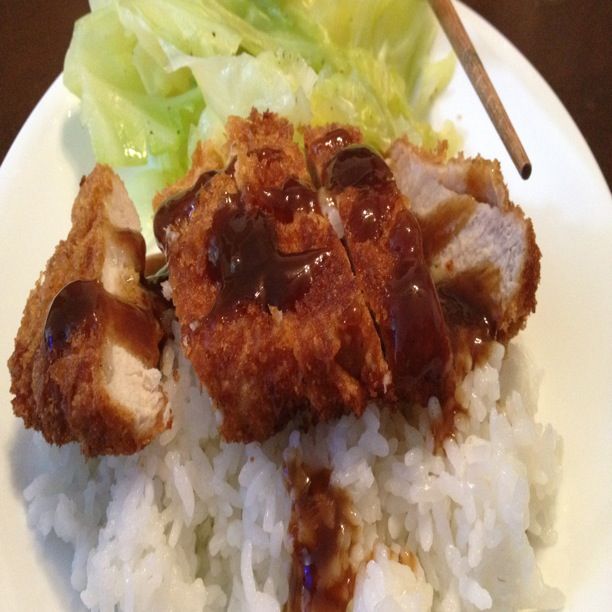
Tonkatsu, what is this strange word or dish or..... OK so I'm not really trying to confuse you but hey the first time I heard the word I was like Huh?. Putting the confusing Japanese syllables aside it is pronounced just as its spelled. Ton-kat-su, not to bad. So what is it really? Simply put its a breaded fried pork cutlet. Its really not all that mysterious at all. Recently I took on the task of trying to recreate this tasty dish as my first attempt at Japanese cuisine. Haden and I first discovered this tasty fried comfort in a small little lunch spot down a side alley in Machida, we didn't even know what it was nor did we figure it our for sometime. It is really quite simple to make . Pork cutlet, lightly floured and rolled in panko bread crumbs then fried to golden perfection. Its usually served sliced over rice with Tonkatsu sauce, kinda of like a BBQ sauce, and shredded cabbage. Simple, easy, delicious and down right awesome. At least in my opinion.
Tonkatsu
4 thick pork loin cutlets or steaks (boneless) or chicken
1 cup all purpose flour seasoned with salt and pepper
2 eggs, lightly beaten
2 cups panko breadcrumbs (Japanese breadcrumbs)
Vegetable oil for frying
Serve
Tonkatsu sauce or BBQ sauce
Cooked rice or cabbage
Cut, 3-4 slits in the fat on the side of the pork cutlets or steaks
Use a mallet to flatten each cutlet, then press to coat in seasoned flour and dip in beaten egg
Coat pork cutlets in breadcrumbs and press to ensure they stick to the cutlets. Allow to stand for 30 minutes if time allows to ensure crumbs hold.
Heat vegetable oil for shallow frying in deep flying pan until it starts to move. Gently lower the cutlets in batches into the pan and cook over medium heat for 5 minutes on each side or until crisp, and golden brown and cooked through. Drain on absorbent kitchen paper towels and keep warm while you cooking
the remaining cutlets. Serve sliced with Tonkatsu sauce, rice and cabbage
OK so you are probably wondering what I am referring to by the title. Obviously I'm gonna be talking about food but in what regards? So here goes, since living in Japan food has taken on a whole new meaning for me. I an American so my cooking style is just that "American". Every chance I get Haden and I try and discover something new we haven't tried. Everything from Ramen or Sushi, typically known in the US, to things like Nikuman, Mochi, and Doria. Some of them exotic and others not so much just exotic sounding. I have come to realize that Japanese cuisine is my kind of food and my coworkers joke I just might turn Japanese because I love the food here so much. Now don't get me wrong I love all the comfort foods of home but I am starting to discover comfort foods of Japan that just can't be beat. In an attempt to really dive in to the bizarre foods of Japan I figured I need to eat and experiencing all I can here and develop my skills in the kitchen for a lifetime of Japanese gourmet enjoyment. Ok so now that is said I have taken it upon myself to try and master certain dishes that I know I can make anywhere I am. Thanks to an awesome Aunt and a cookbook, I am already on my way. You have to start somewhere and why not a cook book. It has pretty much all the basics but its missing a few key recipes, I think anyway, that are standards in Japanese kitchens. And so here starts a journey where I share with you my achievements and maybe failures in the world of Japanese ingredients and dishes.
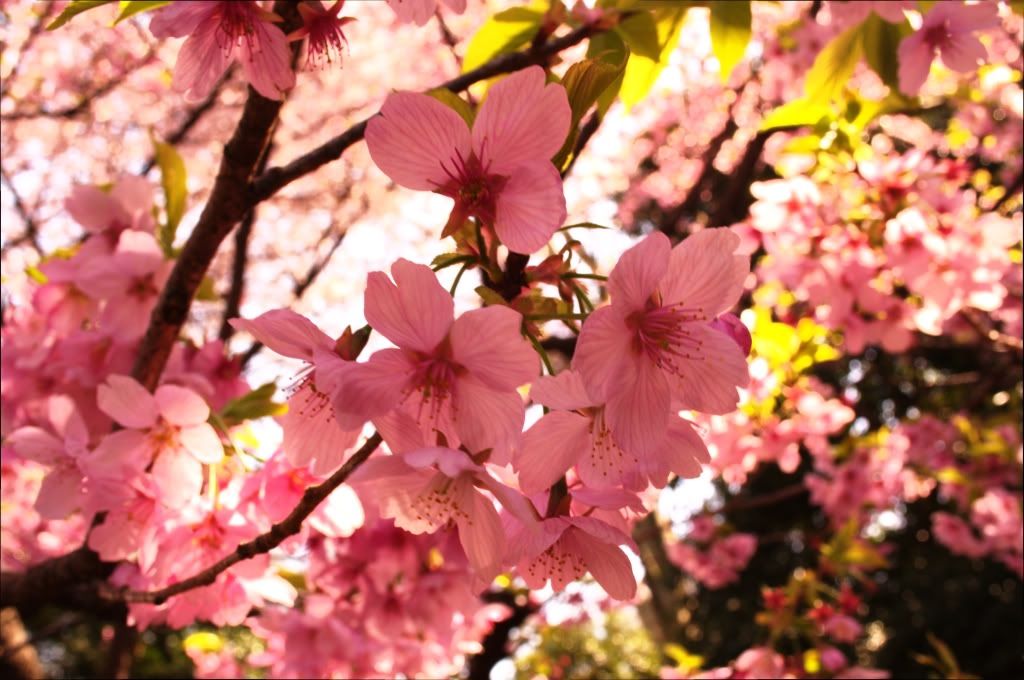
Spring time is the time where everything begins to bloom in an array of colors. Since this is our first
spring here in Japan, it was the first chance for us to experience the blooming of the Cherry blossoms.
Many festivals are held during this time to behold the beauty of all the cherry blossoms blooming
together. Even Camp Zama has a festival to celebrate.
We heard about a very nice park/garden in the Shinjuku area that is supposed to be one the best in
the area. So we went out on a Sunday afternoon to go find it. It took us about an hour by train to get
Shinjuku and a 10 minute walk to get to the park. When we finally found it, the line to get into the park
seemed to stretch several blocks. Fortunately we did not have to go the back of the line because we
found a spot that allowed us to merge into the line closer to the gate.
Once we got into the garden, we finally realized how pack it was. There were areas big enough to hold a
football field packed with people picnicking. It was a beautiful day to just sit down and enjoy the sun on
your skin. Trees with cherry blossoms were everywhere too.
The park itself is very large. It took us the better part of three hours to walk all the way around it. Inside
the park were also ponds with intricate bridges barley big enough for two people standing next to each
other. Mixed among the cherry blossoms where flowers of different colors and shapes. It was a very
beautiful place to be even though it was packed.
We have told you about how easy it is to get around here in Japan, which makes it easy when you really
do not have a plan to do anything.
When people think of Japanese cities they think Tokyo, Hiroshima and Nagasaki first. However, they
do not think of the second largest city, Yokohama. Yokohama is the capital of the Kanagawa Prefecture
(state) and lies on the Tokyo Bay as a major commercial hub.
It had a humble beginning as a fishing village which began to transform into the port it is today in 1859.
Over the next hundred and fifty years, it would go through many transformations and restorations. It
was destroyed by a earthquake in 1923 and by air raids during World War II that caused it to be rebuilt.
In spite of this, Yokohama had many firsts for Japan that include its first daily newspaper (which started
in 1870), first gas-powered street laps (1872) and power plant (1872).
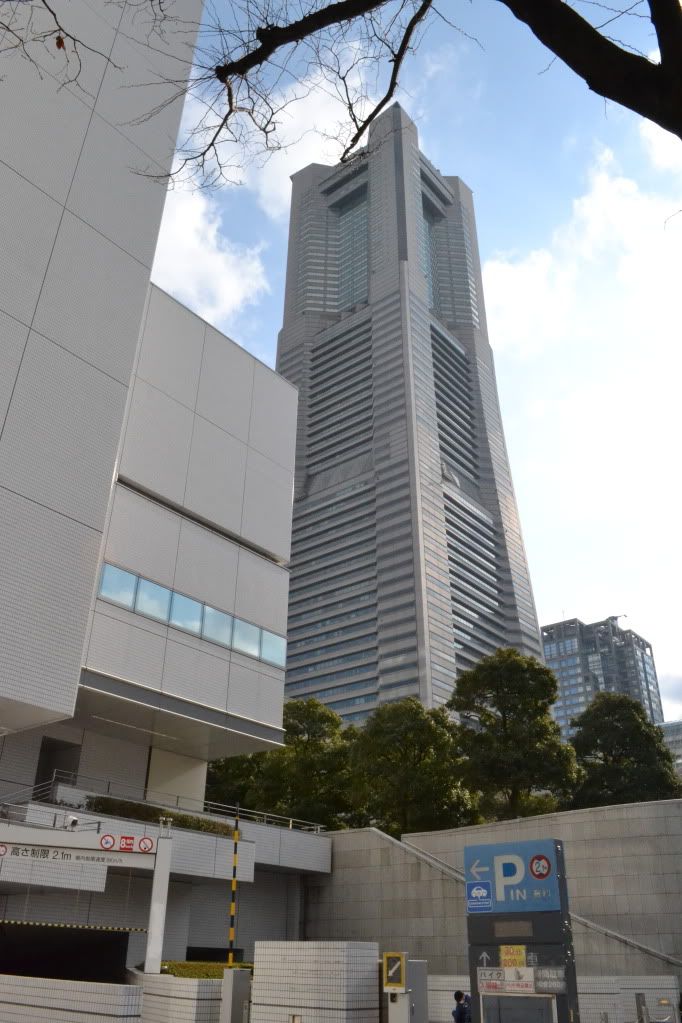
Yokohama contains a diverse selection of attractions for everyone. We went to Yokohama to see
the Landmark Tower, which is the tallest building in Japan. It has 70 floors, but the 69 th floor is an
observatory which offers a 360 degree view of the surrounding area. On clear day you can see Mt. Fuji in
the distance. Landmark Tower has the second fastest elevators in the world. The elevators reach up to
speeds of 28 mph, which means that you reach the top in less than 40 seconds. The views are fantastic
from up there!
We were not able to see everything we wanted that day, but we have plenty of days left in Japan. We
are planning on going to Yokohama’s Chinatown, which is one the largest in the world. The Yokohama
Museum of Art is also located near Landmark Tower, but we did not have enough Yen at the time to go
through.
Yokohama is an exciting city that we thoroughly enjoyed when we went. Now you can stop reading this
and enjoy all the pictures we took!
I want to tell you a story. A story, though ancient, still lives on as Japan's greatest story of revenge.
In a century of great power two clans fought for land. Lord Kudo and Lord Ito battled to rule the many territories of eastern Japan. On a hunt, an attempt to kill Ito was made, Kudo missed and killed the man sitting next to Ito. His name was Kawazu Saburo and was the son of Ito and Kudo’s cousin. Soon Kawazu’s wife heard the news and wept at his body. Kawazu’s had two sons one 3, Goro, and the other 5, Juro. She told the news to her two sons and said, “ You both are too young to understand, but when you grow up, I want revenge for your father.” The elder son of only 5, staring at his father's body, replied, “ I swear that someday I will get revenge for him.”
The wife remarried to the Soga family but the elder son never forgot the words of his mother or his vow to avenge his father's death. Several years passed and though loved by their step father the eldest son longed for his father Kawazu.
As the years passed the Minamoto family (allied with the Kudo clan) defeated the Taira family to become rulers of Japan. Minamoto family headed by Minamoto-Yoritomo, established the Kamakura Shogunate, the first samurai government. In time the brothers were informed of a great hunt to take place at the foot of Mt. Fuji. This was the very moment the brothers decided to avenge their father's death. Because of the grand scale of this hunt, it was easy for the two brothers to slip into the followers of Yoritomo and plan their attack. The brothers plan was to find where Kudo would stay at night. The brothers always kept an eye on Kudo but night time was the best opportunity for their revenge since he would be alone.
Under the cover of night and rain the brothers snuck into Kudo’s room. Its was nearly midnight and Kudo was fast asleep and unaware that his life would soon end. “Wake up Kudo! I am Kawazu Saburo’s son Juro.” and “I am his younger son Goro. Now you pay your debt for the death of our father.” Kudo, without thought, instinctively reached for his sword, but not swift enough. Juro slashed Kudo from his left shoulder to his right armpit rendering Kudo defenseless, while Goro severed his waist and finished him off with a stab to his stomach. With roaring voices, “ Ye who are afar, hear and tremble! Ye who are near, behold and wonder. We are Kawazu Saburo’s sons: Juro and Goro. We’ve just slain Kudo, in the name of vengeance, who killed our father.” Kudo’s men heard the proclamation of their leader’s death and swarmed the two brothers. Both brothers fought bravely, but during the fight Juro was slaughtered and Goro captured.
Held captive, Goro was drug in front of Yoritomo to face investigation for his assassination of Kudo. Goro knew that because of Kudo’s high stature, his revenge would lead to nothing but his death. Unafraid, Goro recounted what Kudo had done to his father. Yoritomo sympathised with Goro because he too, as a child, experienced life in exile. He wanted to save his life even though Kudo’s sons demanded the execution of Goro. Goro said, “Give me death, I’ve been resolved to die. I want to meet my father and brother in the next world as soon as possible.” Under the orders of Yoritomo, Goro was beheaded with a blunt sword. Goro gave honor to his father, mother and brother.
The revenge of the Soga brothers was sealed and their story would be told and passed on through the generations. Jump 819 years into the future where Kristina and I traveled to the Soga Hills on a hiking trip not knowing this story. Winding through the lush hills, we encountered breathtaking views of the oceanic coast where you could see the Volcano Island and the snow covered Mt. Fuji guarding the city of Odawara. Within the trees, bright orange tangerines peek through and a bamboo forest shoots into the the unreachable sky. You can feel a sense of history, whether it’s knowing that these hills are named for a famous revenge story or the hidden buddhist shrine where ancient monks were buried. Hiking through these hills remind you that there is so much more to life.
It was also the time of year when festivals began to start up. At the base of the Soga Hills was a Plum blossom festival in full swing. There were many performances that were occurring, like plays and dances. We even got venturous with our choice for food by trying Mochi for the first time. Mochi is a Japanese delicacy that is usually eaten as dessert. It is made of pounded sweet rice flour that is made into really chewy balls. Mochi is generally served with some sort of sweet powder, but it can be served with other toppings as well. We tried some Mochi with a savory sauce that was made from soy sauce, daikon (Japanese radish), and sprinkled with bonito (dried fish flakes). This was not our favorite topping on the Mochi, but we decided to try some more. This time we ended up getting Mochi dusted with sweet rice flour. This we definitely liked, or more importantly Kristina liked it. All in all it was a great trip to the countryside away from the hustle and bustle of the city.
Our move to Japan has been exciting and nerve racking. Exciting in that we moved to JAPAN! Nerve racking in trying to figure what the Kanji stands for. Now you don’t need a care to get around with the great public transportation, but it is nice to have one when you have to drive the 35 km to Yokota or pick up a new 52” TV! But let’s talk about the process of buying one first.
The process of buying a car can be broken down into four simple steps, so what’s so hard about that? Well when everyone speaks broken English or what Kristina likes to call “ Japanese English” and you have no idea where to go or who to go to, it gets complicated. This is the breakdown of steps to go get a car.
1. Find a car that you like and put a down payment on it, generally 20,000 yen.
2. Get insurance on the car, which can cost up to $700 a year.
3. Then you take it to be inspected on base and get it cleared through the base.
4. Then you take it to the Land Office (LTO) and have them inspect the vehicle.
5. Once that's done, you have to purchase what is called Japanese Compulsory Insurance or JCI which you have to pay for every 2 years.
What we actually did was get a ride down to a used car dealership called Wellcham. I would say that about 80% of vehicles that are driven on base come from this place. The reason being is that they list car prices in US dollars and the price includes everything, i.e. JCI and the inspection at the LTO office. The only thing you really have to pay for is getting the base inspection done and insurance on your car. They basically un-complicate the process and that’s why they get 80% of the American business.
Now that we got a car we can go hit the streets and drive all crazy! Right? Unfortunately, not so much. The roads here are about ½ the size you would have in the states. Basically, Japan reduces what a two lane road we are use to about the size of alley ways in most cases. That’s why everyone here drives very tiny cars, well tiny compared to what Americans drive. You cringe when you see a H2 (yes, someone brought their Hummer here) or an F-150 roll up the street. Also, pedestrians and bicyclists love hogging the street. You will be driving down the street and then some person just walks out with no care in the world. You have to drive slowly through some areas because of there is no sidewalk to walk on, so people walk in the street. These two things were the hardest thing to get use to than actually driving on the left hand side of the road.
There are plenty of minor differences between here and America. Speed limits are in kilometers and not miles, which can be confusing especially when you get up to 80+ kph while it actually is 50 mph. Road signs really do not exit, and roads do not have names like back in the states. The only signs are ones for major routes, like highways. However, on these “highways” there are tons of cars making the 35 km to Yokota take at least an hour. I did not believe this until I was driven down Route 16, and trust me, it does take that long. Stopping point for intersections are generally 10 feet back from the actual intersection. This allows the bigger trucks to make the turns safely and causing no damage to other cars. But this means we cannot make a left hand turn (a right hand turn for you in the States) on a red light.
Car accidents happen all the time in Japan because of the massive amount of traffic. A big difference between the United States and Japan is that every driver is considered a professional driver. That means every time you put your keys into the ignition of your car, you take responsibility of any accident you are in. Everyone involved in an accident shares some of the blame. This is because if you did not get on the road in the first place, then there would not of been an accident. Crazy huh? So if you get T-boned while trying to make a right hand turn because the other driver failed to stop, you still get some blame. The insurance companies then battle it out in an octagon of death. Not really, but wouldn’t that be fun to watch?
If have any questions about driving in Japan, comment below and I’ll answer them to the best of my knowledge!
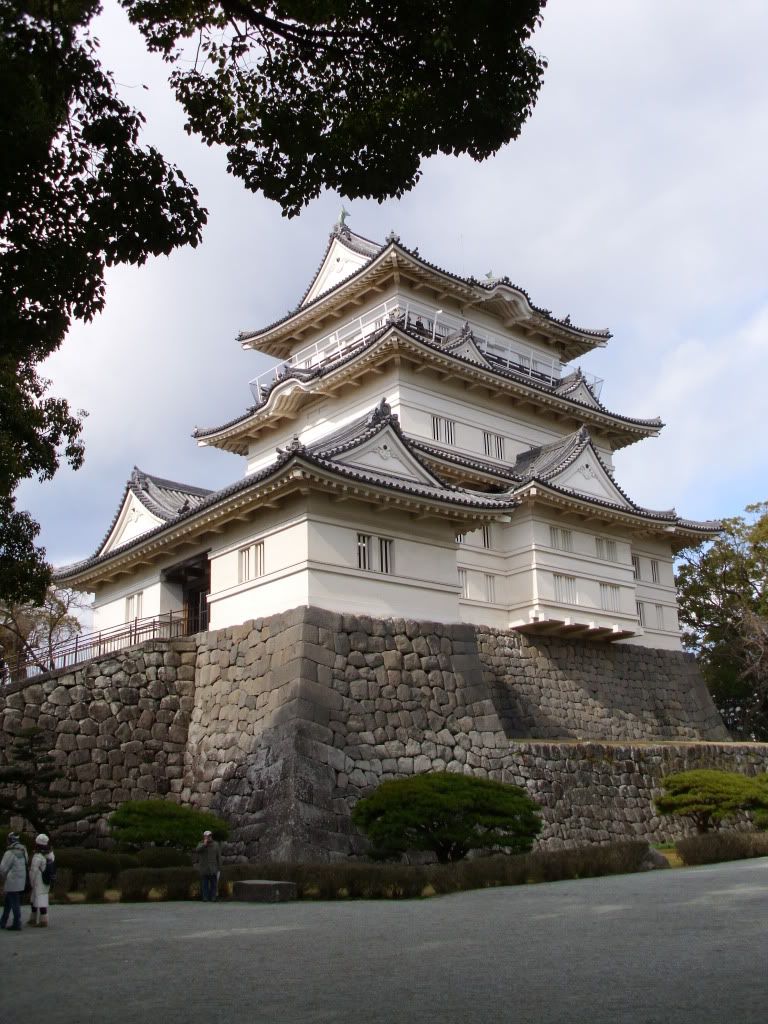
Japan is an ancient culture compared to the states. Haden and I definitely understand this while visiting the Odawara Castle.
"For a little background history, Odawara Castle actually began in the 15th century with a stronghold built by the Omori Clan. After Hojo Soun conquered the area in 1495, he and his ancestors gradually expanded the castle as the Hojo clan gained power. At the height of their power, the Hojo controlled much of the Kanto area with support castles on the fringes in modern day Chiba, Ibaraki, Saitama, and Kanagawa prefectures.
Odawara Castle faced three major attacks by Uesugi Kenshin in 1561, Takeda Shingen in 1569 and Toyotomi Hideyoshi in 1590. The last siege by Toyotomi Hideoyoshi was the end of the Hojo clan's supremacy and the castle was turned over to Tokugawa Ieyasu.
In the final siege by Hideyoshi, he brought all his generals from around the country with about 200,000 troops to bear on Odawara Castle. In the leadup to the siege, the various generals took over Hojo castles and strongholds on their way to Odawara. As Hideyoshi closed the net around Odawawa he flaunted his strength by creating an almost festival like atmosphere with performances and tea ceremonies and he even brought in his concubine (Yodo-dono) and tea master (Sen no Rikyu). Hojo eventually conceded his defeat and turned over the castle with little bloodshed.
Once Tokugawa Ieyasu took control of the cstle, he stationed his vassal Okubo Tadayo as castle lord. Okubo reduced the size of the castle from the Hojo days because it representated a threat to the Tokugawa power. The Okubo family ruled over Odawara for the entire Edo Period except for a brief period in the 1700's. The castle was dismantled in 1870." ((http://www.jcastle.info/castle/profile/34f)
The Odawara Castle is like nothing Haden and I have ever seen. The architectural style is amazing and has a way of making you feeling apart of the history.
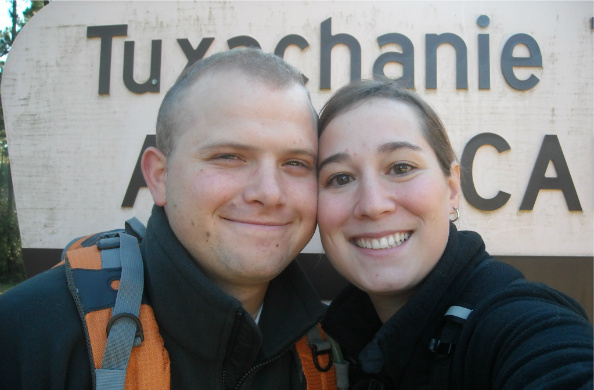
We're a young couple with enthusiasm for hiking, backpacking and adventuring in the world. This blog is a place for us to share our experiences, thoughts and philosophies from the prospective of husband and wife travelers.






 Posts
Posts

